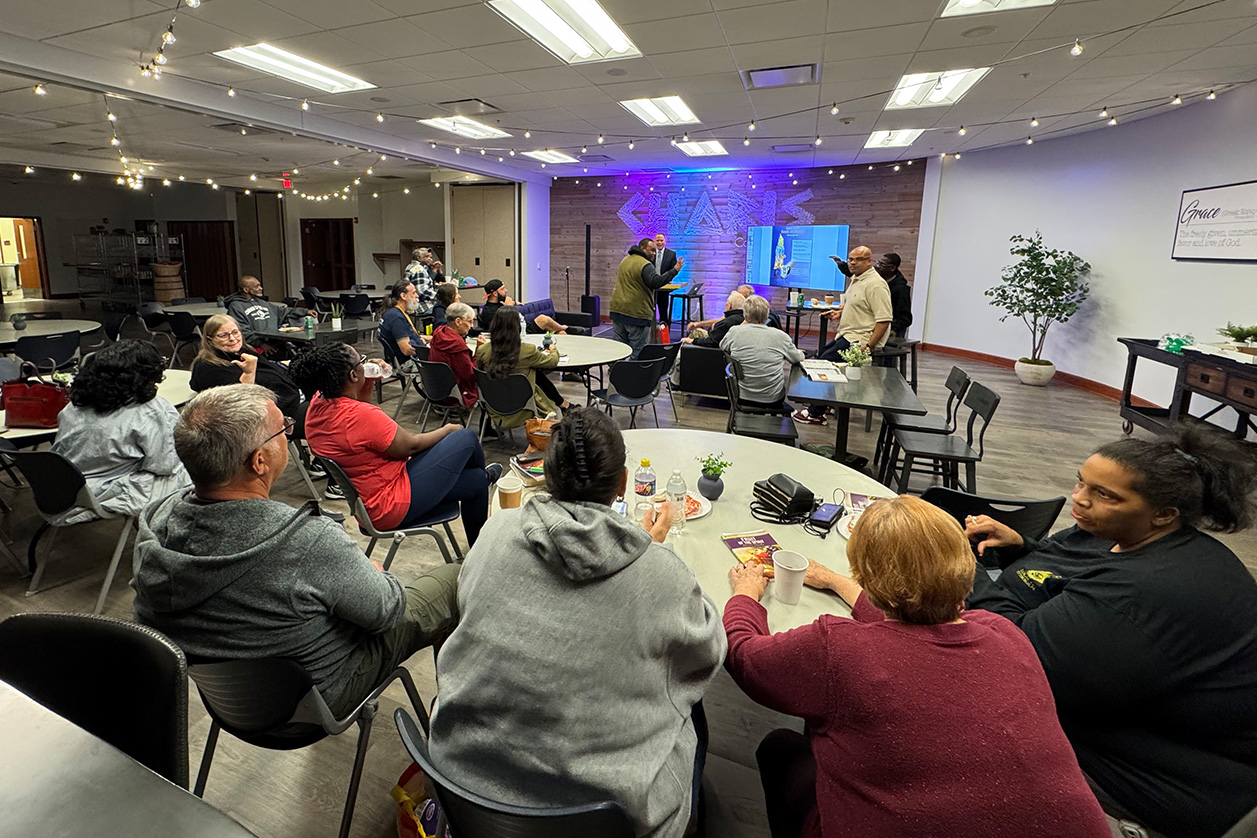
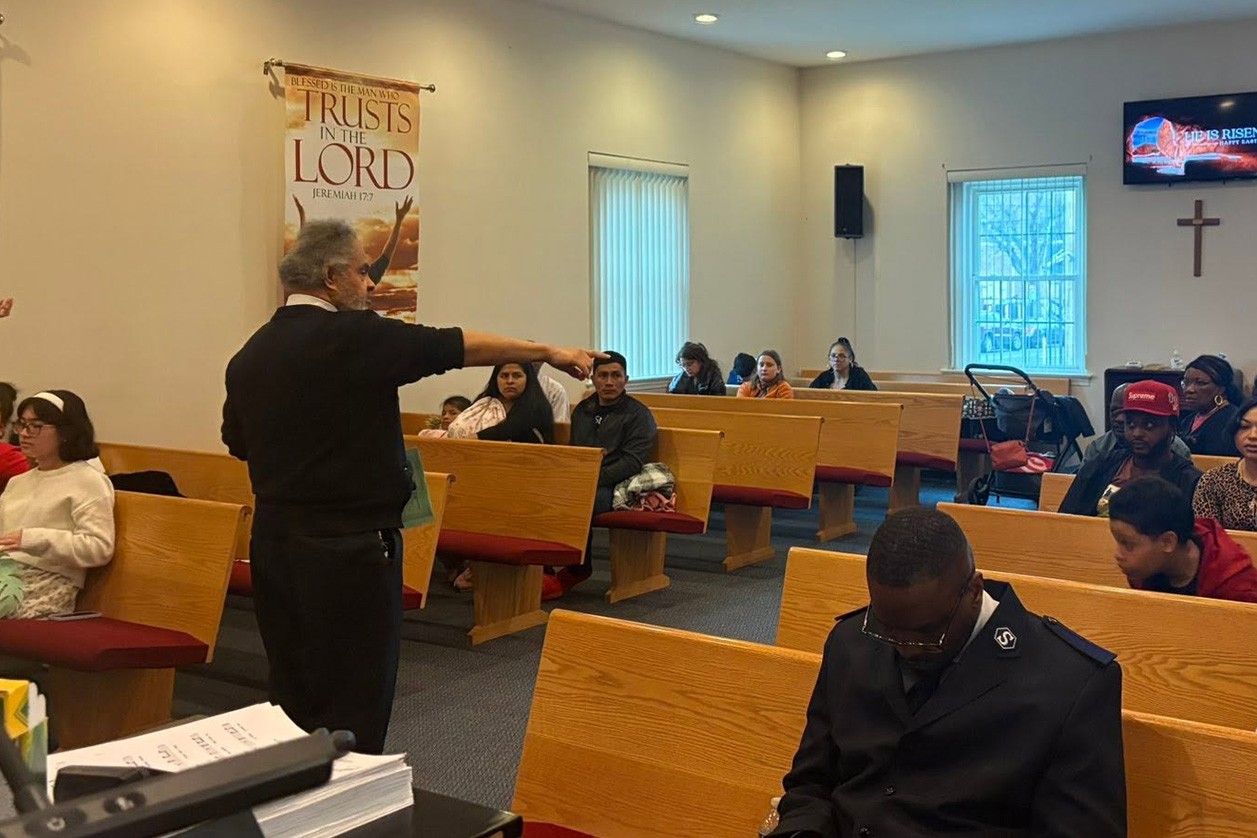
(Photos provided by Major Migdalia Lavenbein)
One Corps, One Pantry, ‘One Love’
By Hugo Bravo
At a little over 31 square miles, the island of St. Thomas in the U.S. Virgin Islands has just one Salvation Army church, located in its downtown district. Only part of the building is currently in use due to hurricane damage, but the Army’s presence on the island remains too important for its ministry to pause.
“The island is a paradise, and the corps is in a beautiful location. But it’s an area with poverty and crime,” says Major Migdalia Lavenbein, corps officer at St. Thomas. “So that means it’s at the heart of where The Salvation Army can do its best work.”
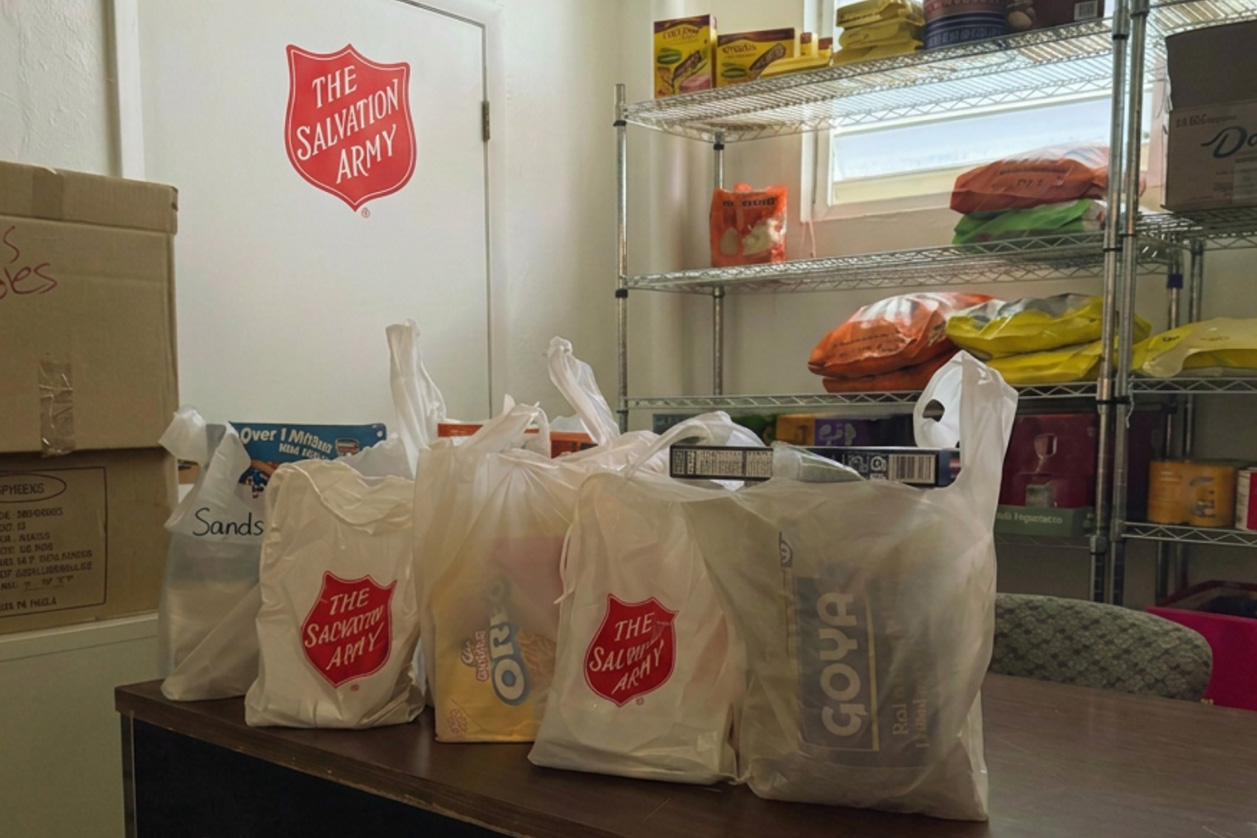
As the St. Thomas Corps prepares for extensive repairs and renovations, many of its programs have shifted to the Winston Raymo Recreation Center, a government-operated facility less than a mile from the corps. In March, the location debuted the Army’s food pantry ministry, providing groceries and food products to families.
“There are charities on the island that do soup kitchens. Our own soup kitchen sees about 80 people a day, but we’re the only food pantry in St. Thomas,” says Major Tim Lavenbein.
Service during the shutdown
St. Thomas thrives on its tourism industry, with flights arriving at and departing from Cyril E. King Airport, connecting the island to the U.S. mainland and parts of Latin America. Many international travelers reach St. Thomas by first flying to San Juan, Puerto Rico, and then taking a short connecting flight.
Earlier this year, the U.S. government shutdown impacted TSA workers in the United States, with many of them working without pay for weeks.
“The shutdown was eye-opening for our neighbors,” says Major Migdalia. “We had TSA workers who had never seen a food pantry in their lives coming to us for help. The Army had to be that beacon of hope for that part of the community through our ministries.”
Before St. Thomas, the Lavenbeins served in Hartford, Connecticut. While St. Thomas and Hartford are vastly different, the pastors say, both places face rising costs of living. Unlike in Hartford, organizations that help the needy are scarce on the island.

The community aspect of living in St. Thomas has made an impression on Major Migdalia. She says, “Back in the mainland, if somebody can’t make it to the soup kitchen, nobody really gives it a second thought. Everybody just wants to feed themselves. But here, if somebody can’t make it to soup kitchen, you have about six different people who want to ensure that that person gets fed somehow.”
She notes that the Caribbean culture has a belief called “one love.” If there is one meal left, she says, you will see one person trying to split it among three people because they really do care about one another.
“And it’s the same thing with the food pantry. They really want to care for one another, and they will share with one another. There are no strangers here,” she says. “It just gives us such hope and joy knowing that here, everybody takes care of everybody.”

Planning ahead
With the food pantry and an after-school program running out of the Winston Raymo Recreation Center, the Majors Lavenbein are looking ahead to growing the Army’s presence in St. Thomas. Among the pastors’ plans are a senior citizen program and a collaboration with the University of the Virgin Islands.
The next program, Love in a Backpack, is something the officers are bringing from Hartford to St. Thomas in the fall. Children about to start classes will receive a free backpack filled with school supplies and food for their families.
“We believe that we’re going to get the grant needed to do it. And if we’re not able to, we know that God will find someone to provide,” says Major Migdalia. “We’re not afraid to ask for money, because it’s not for us. It’s for God’s children living in St. Thomas.”