Offering a Flourishing New Life
by Robert Mitchell
Jesus answered, “Everyone who drinks this water will be thirsty again, but whoever drinks the water I give them will never thirst. Indeed, the water I give them will become in them a spring of water welling up to eternal life.” —John 4:13–14
The Salvation Army in Toledo, Ohio, recently opened the Flourishing Wellspring Center, a drop-in location for anyone involved in or at risk of falling into human trafficking and related issues.
Major Candy Fritsch, coordinator of The Salvation Army’s Northwest Ohio Area Services, said the center is off to a great start since opening October 1 in a wing of The Salvation Army in Toledo.
“We’re already seeing the impact it’s having in our community,” Fritsch said. “We served 65 women just in October and that’s for a brand-new program. All the agencies that we collaborate with are coming to us and want to help us make this a successful program.”
The center, which is open four days a week from 9 a.m. to 1 p.m., is for people involved in, or at risk for, human trafficking, labor or sex trafficking, street-based prostitution, and domestic violence.
“That includes women who are housing insecure, homeless, and those who have income issues,” said Keri Black, the center’s outreach and program manager.
Oasis in the desert
The center is a “safe and welcoming place,” Black said, offering showers, clothing, food, and hygiene products. The women can find support groups, health screenings, and comprehensive case management to improve their lives emotionally and spiritually and get them out of their current situation.
The center sees an average of eight women a day. Most are in their 30s, 40s, and 50s. The staff includes Black and Cierra Ruell, a program advocate.
“Just about every day we’re open,” Black said, “we see one or two new faces.”
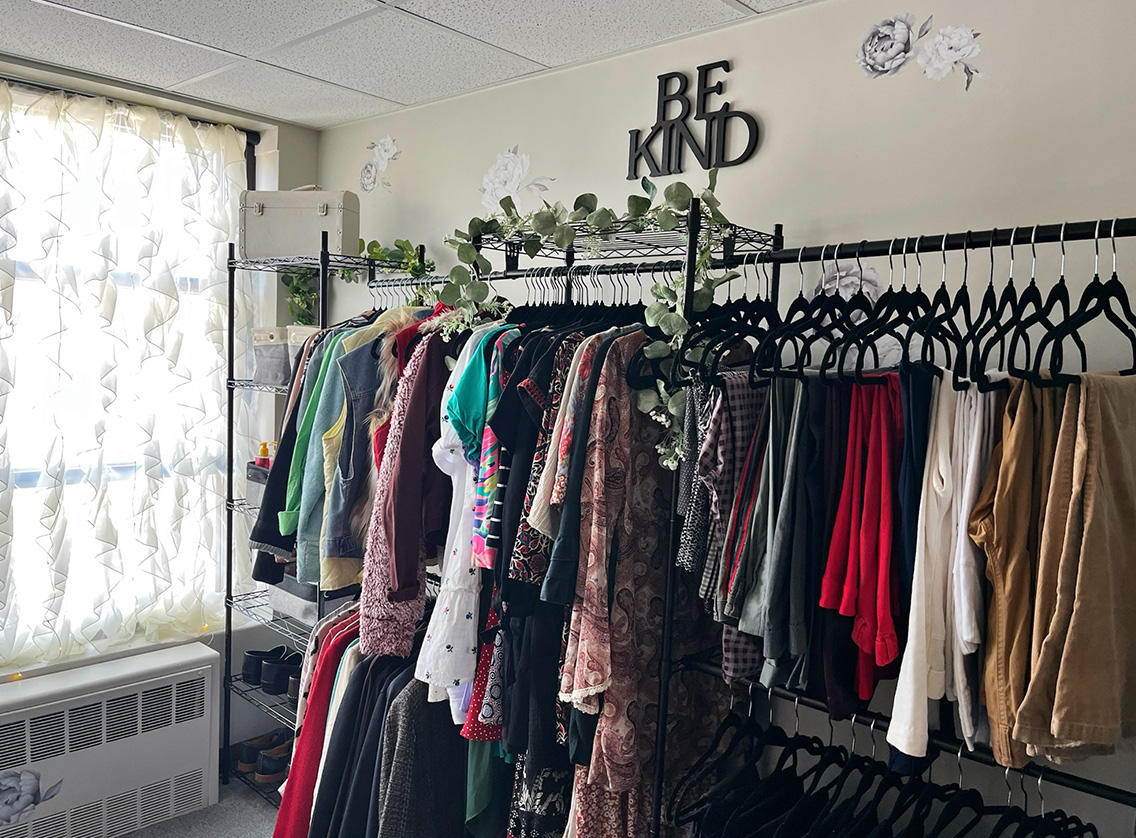
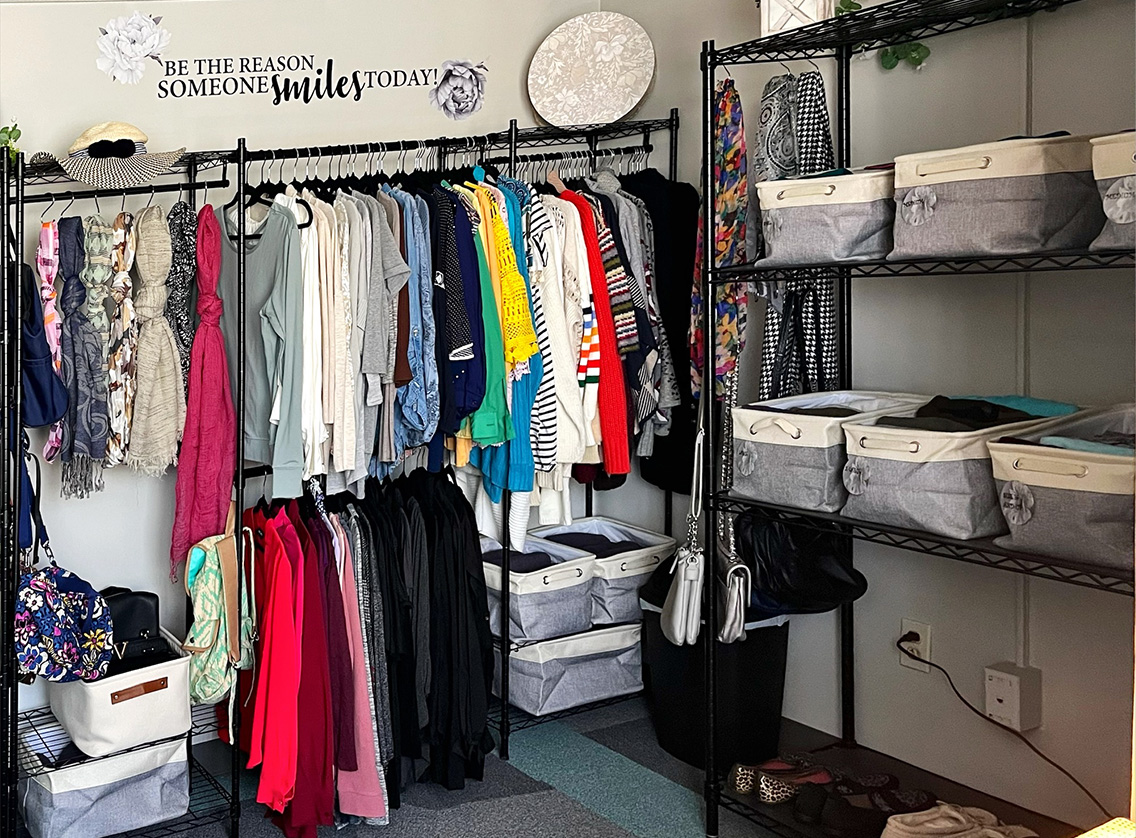
The women receive something new each day they attend, including undergarments, socks, toiletries, and other needs. They particularly appreciate “boutique day,” a women’s clothing pantry providing a mix of casual and professional attire.
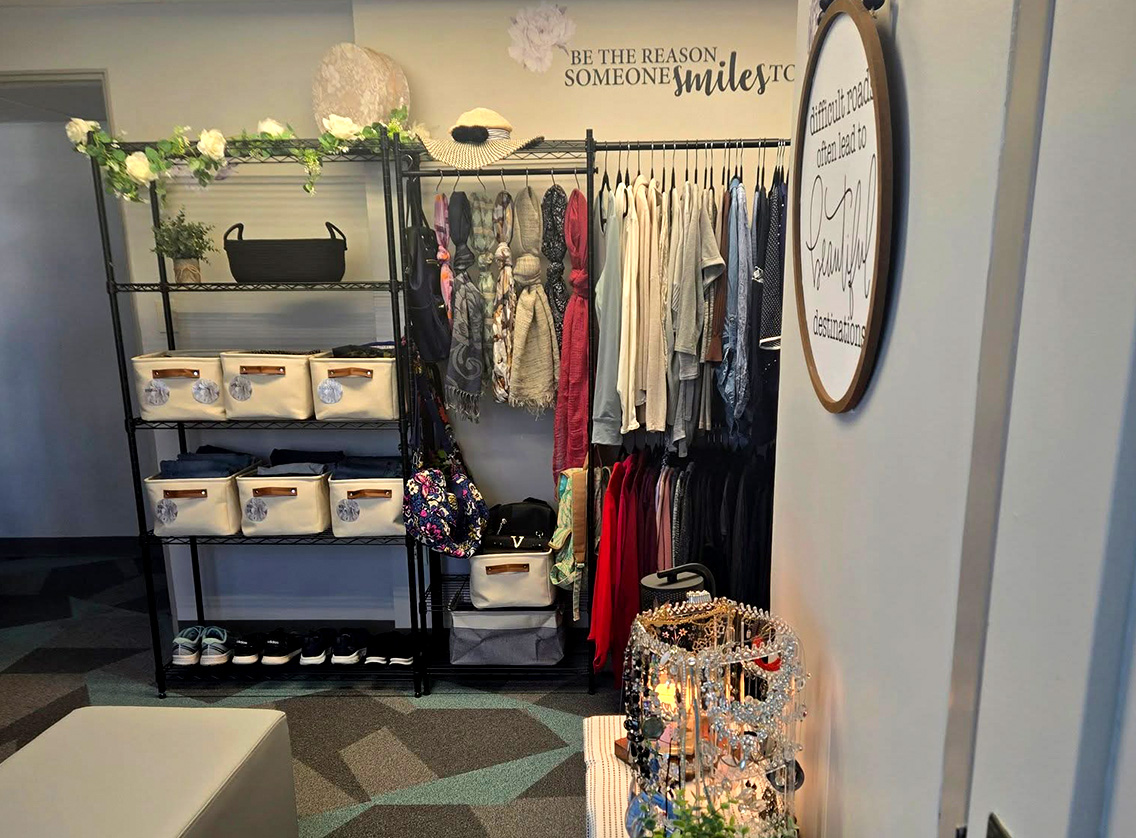
“Some of the women are going to court or have a job and need clothing for interviews and work,” Black said.
The center also advertises peer support and advocacy, like the group she calls the “Breakfast Club.” The small cadre of former clients show up at 9 a.m. to make coffee and mentor the younger women. One woman, who sees it as a calling, gets the others signed in and leads tours.
“She really sees that God leading her to our drop-in center was His way of putting her in a position to help younger women who are in the same place that she was once upon a time,” Black said.
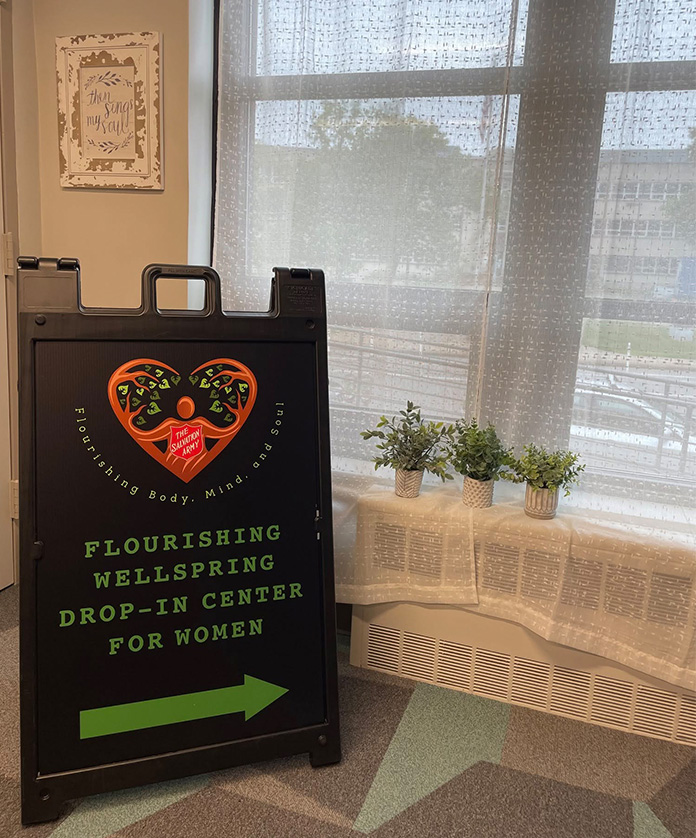
Christ is here
Spiritual help is also available to anyone walking through the door. A weekly Bible study starts in January, and the women have access to the Christian family of believers at The Salvation Army in Toledo. Fritsch gets help there from Lieutenants Christian and Kiara Blaire.
Fritsch prays with survivors and gives them “some words of hope.”
“I meet people where they are. There are a variety of needs. When you deal with people in crisis, everything is a crisis for them,” Fritsch said. Something as simple as the Scripture-based adult coloring books the women can get at the center can make a difference. “They’ve appreciated it because sometimes the Scripture they get that day is exactly what they needed.”
Black, a victim of sexual abuse who witnessed domestic violence as a child, brings her Christian faith to the position. Her past is certainly a motivation in her current work, she said, but she really learned about the human trafficking issue while studying at Adrian College in Adrian, Mich., a United Methodist school founded by abolitionist minister Asa Mahan.
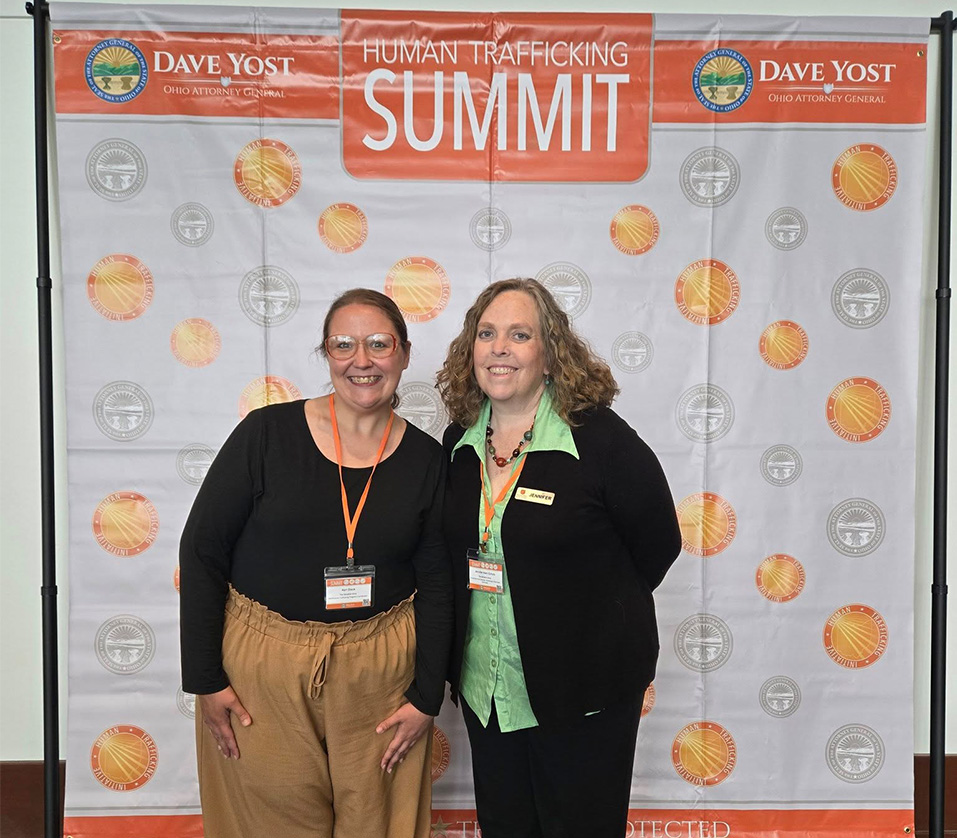
Black went on to get her master’s degree at the University of Toledo and learned she could make a career of fighting human trafficking and related issues. The writings of Mahan, who talked about the intrinsic value of every person, inspired her as she worked for a host of local agencies before joining The Salvation Army in July.
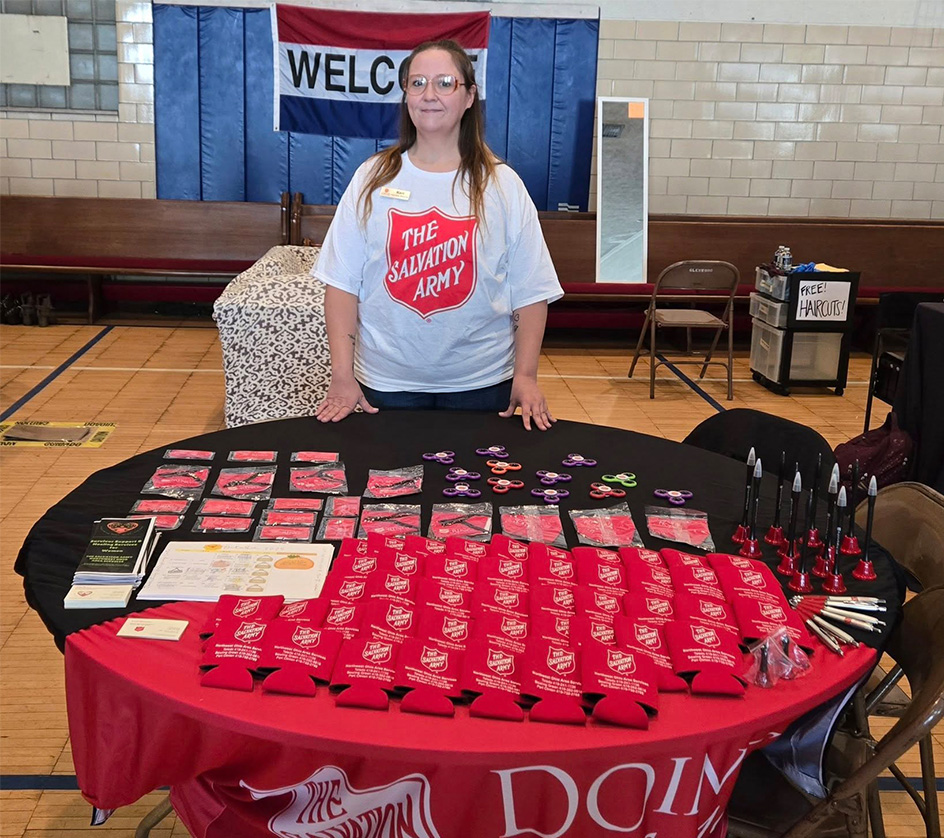
Standing in the gap
Black is determined to try to be a part of the solution.
“It’s been a part of my faith since I learned about the issue. I felt that’s what God called me to do,” she said. “People are selling souls. And that’s not OK with me as a Christian person, and I’m going to do everything I can to help. If I can give back to one person what I didn’t have, then all these years of stress are definitely worth it.”
The drop-in center was two years in the making as The Salvation Army and others surveyed the community to find the gaps in services.
“What they consistently heard was there needs to be a drop-in center,” Black said. “Somewhere where women who are at risk or trying to leave situations can go and really have a holistic approach to healing — physical, emotional, and spiritual.”
A lot of research and the media have branded Toledo as a human trafficking hub, Black said, but the city is dedicating many resources to the issue with the help of local hospitals, rehab centers, and the FBI’s Innocence Lost Task Force. She’s in the fight for the long haul.
“We intend to grow,” she said. “We know that we’re only filling one very small gap and that there are a lot of small gaps that kind of come together to make a giant crater in our community.”
Click here for more information on the Flourishing Wellspring Center in Toledo.