The Case for Miracles
by Warren L. Maye
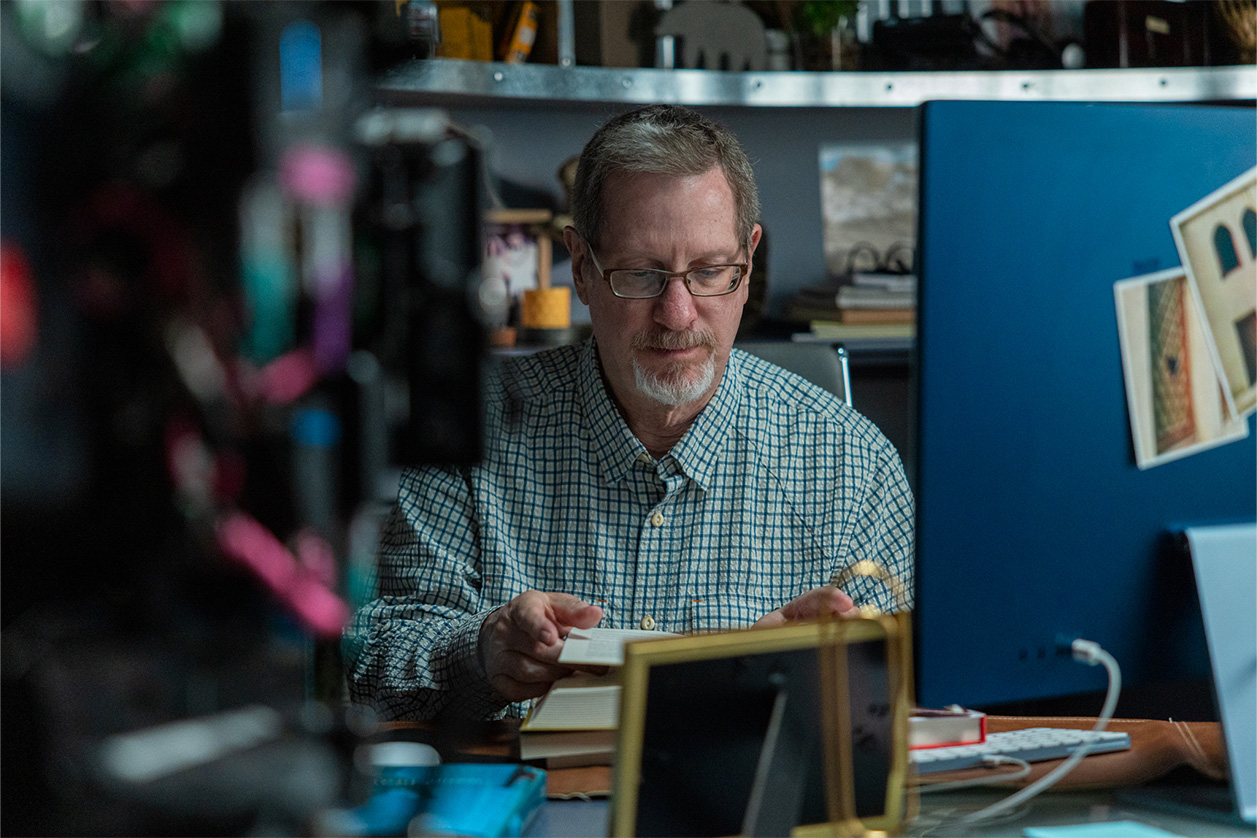
Why a movie about miracles, and why now? Lee Strobel, the filmmaker behind The Case for Miracles, has written 40 books, including The Case for Christ, whose film adaptation became a box-office hit in 2017. This award-winning investigative journalist and atheist-turned-Christian has written about everything from the Resurrection to near-death experiences, always treating each claim with clear-eyed scrutiny.
This time around, Strobel chose Christmas as the perfect backdrop. After all, Christmas itself is the story of a supernatural event —God’s entrance into human history. Strobel wants viewers, especially Christians, to feel confident that “God is still in the miracle business.” And for those who are merely curious, he hopes it acts like an invitation: “Hey, maybe there’s something more to this story of Jesus.”
What’s a miracle anyway?
So, how do you translate dry case studies into compelling cinema? Strobel zeroes in on four criteria for naming something a miracle:
- Solid medical documentation — peer-reviewed studies, hospital records, the whole nine yards.
- Multiple, credible eyewitnesses with no motive to lie.
- Exhausted natural explanations — doctors, scientists, skeptics all weighing in and coming up short.
- A clear context of prayer or spiritual appeal.
When you check those four boxes, Strobel argues, you can say with confidence that “something unexplainable happened.”
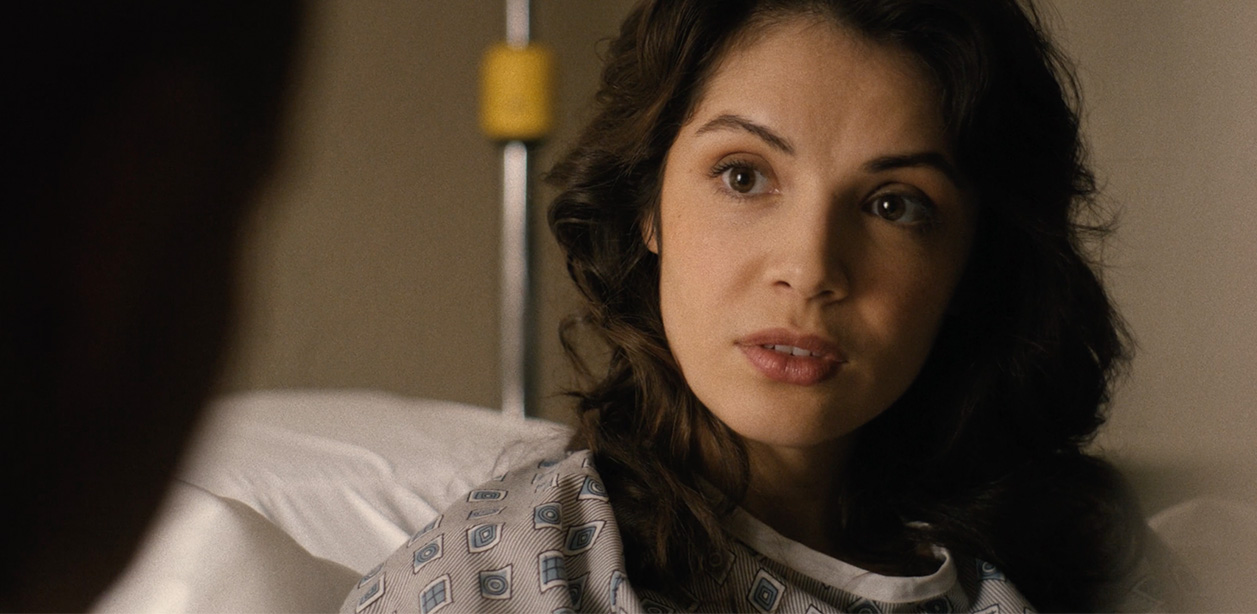
One of the stand-out stories involves a woman who’d been blind for a dozen years from juvenile macular degeneration — no known cure, no chance of reversing it. She even learned Braille, walked with a white cane, and married a Baptist pastor. One night, he simply prayed for her: “God, I know You can heal my wife. I pray You do it tonight.” Immediately, she opened her eyes and saw him for the first time. Her vision remained perfect for the next 50 years. Doctors published case reports in peer-reviewed journals. Eyewitnesses were vetted. No natural cause was found.
In another unforgettable segment we meet a child declared clinically dead — no heartbeat, no respiration, no brain waves — only to return to life in the morgue and grow up to become a renowned Latin worship leader.
During my recent interview with Strobel, he said, “One woman vividly remembers floating above her own body, watching medical teams at work, even noticing tiny details no one expected her to see. She described a red sticker on the top blade of a hospital ceiling fan, something you can’t see from the bed, but she perfectly recalled it once she was revived. Hospitals, doctors, records — all confirmed she was unconscious when she ‘saw’ that sticker.”
The film also bridges science and spirituality by taking us to Flagstaff’s historic Lowell Observatory, the very telescope that first pointed to an expanding universe. Roll the film backward, and you “see” a beginning of time — the Big Bang.

“If the universe began, it needs a cause,” said Strobel. “Whatever cause could bring galaxies, stars, even us into existence? That aligns strikingly with descriptions of God.”
The film’s most affecting moments come not from explaining the cosmos, but from the touching, personal testimonies. Strobel lets his witnesses speak in their own voices, allows pauses for reflection, and frames his subjects in soft focus as they recollect their awesome moments.
Answering skeptics — head on
Of course, Strobel doesn’t shy away from skeptics. He opens the movie with Michael Shermer, America’s leading skeptic, laying out reasons why miracles just don’t make sense. But then the rest of the film answers those objections head-on. Fraud? Placebo effects? Stunning coincidences? Sure — some claims collapse under scrutiny. But some defy every natural explanation, even after the hard questions have been asked. And those are some of the stories this movie tells. But it’s hard to know if they will persuade the skeptics or merely satisfy those who already share Strobel’s faith.
So, what do we walk away with? For believers, a chance to deepen faith beyond statistical evidence — to see that prayers still matter, that God still hears. For the curious, a window into evidence you can test yourself — through peer-reviewed journals, medical records, multiple witnesses. And for everyone, a reminder that around Christmas and especially in the New Year, maybe it’s worth opening our minds to the possibility that miracles are real.
Strobel’s Salvation Army connection
In a prior interview in 2017, Lee Strobel shared with me how The Salvation Army played an important role in his ultimate testimony of spiritual transformation.
The year was 1974 — a time when Strobel was an avowed atheist, working as a reporter for the Chicago Tribune and about to embark on an assignment that would forever change his view of faith, compassion, and the God he thought didn’t exist.
It began when Lee’s editor assigned him a 30-part series on Chicago’s poor. Strobel was curious, but not about faith. He was curious about stories, numbers, facts. His feet took him to a Salvation Army shelter on the city’s northwest side, called the Emergency Lodge, run by a remarkable woman named Captain Joy Wessel.
Captain Wessel welcomed Lee warmly. She handed him a visitor’s badge and said, “Yes, you can do your research here, just fine.” And for the next two weeks, he did exactly that. He became a fly on the wall — watching volunteers hand out meals, listening to broken voices share their struggles, seeing men and women get back on their feet.
But what really struck him wasn’t the statistics. It was the love. The volunteers didn’t just box up soup. They took time to look people,and Lee, in the eye. They helped them find jobs, offered financial counseling, and stayed patient when addiction reared its ugly head. “They saw people as human beings, not problems to solve,” Lee told me.

And then came Sally
Sally wasn’t a person. She was a dog, a pointy-eared, long-tailed sweetheart who sat with the kids. “Whenever a child felt scared or alone, Sally curled up beside them,” Lee said. “One little girl, Penny, told me, ‘Sometimes when I’m not feeling too good, Sally makes me feel better.’ Penny’s words stuck with Lee. Here was love embodied in fur and wagging tail — simple, pure, immediate.
After two weeks, it was time to leave. Lee gathered his notes, quotes, and numbers. He was ready to write his pieces and move on. Captain Wessel saw him at the door and asked quietly, “Do you ever think about Jesus?”
“My instinct was to laugh it off,” remembered Lee. “An atheist journalist doesn’t field questions about Jesus. But something in the way she asked — genuine, gentle, without a hint of proselytizing — stopped me in my tracks. All those hours I’d spent watching volunteers live out what they believed … I realized I’d been watching faith in action.
“I remember preparing my standard, dismissive reply. But the words never came. Instead, I found myself asking questions. What if the love I’d seen was a glimpse of something bigger? What if there really was a God who moved through these people? I walked away that day with more than research notes; I walked away with my mind — and eventually my heart — opening in ways I never expected.”
That moment at the Salvation Army shelter was the miracle on which Lee’s life turned. There was no argument on a street corner or heated debate in a classroom. It was quiet, unassuming compassion. It was a woman who lived her faith, and a dog that brought comfort. It was love that had the courage to ask the simplest question, “Do you ever think about Jesus?”

Visit the movie’s official website for details on how to watch The Case for Miracles.