Forming Faithful Salvationists: The Role of Family and the Corps
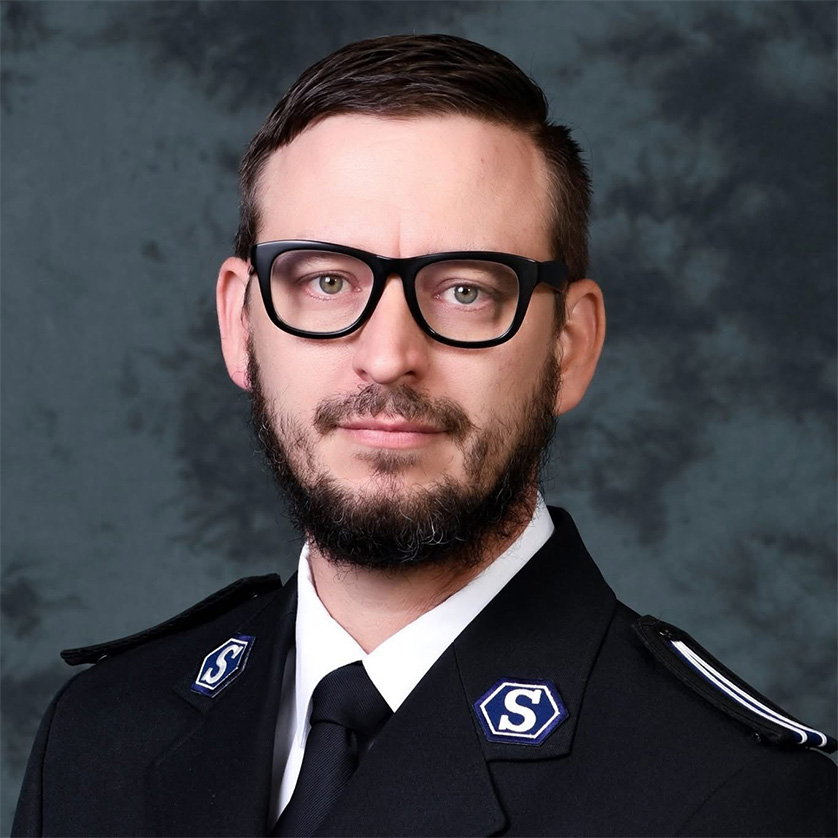
by Dr. Bryan Cook, USA East Director of Corps Leadership Development Bureau
Part 3 of a four-part series from the USA Eastern Territorial Theological Council
On December 15, 2021, my life changed forever.
As I held my newborn daughter in the hospital that night, a great weight of responsibility washed over me. I knew the world into which she had been born. I knew something of the trials she would one day face. As I looked down at this tiny, helpless child, overwhelmed by more emotions than I could describe, I found myself thinking about the responsibility God had entrusted to me.
I knew that one day she would have to take up her cross and follow Jesus. I knew that following Him would not always be easy. There would be trials, temptations, and even suffering for the sake of the gospel. While I could not protect her from everything she would encounter, I could begin preparing her heart for the One who would never leave her.
So that night, as I held her in my arms, I read the entire Book of Romans aloud to her.
I wanted the Word of God to be among the first words she ever heard. I wanted those truths planted deeply within her heart, long before she could understand their meaning. Above all, I wanted her to know the God who had created her, loved her, and called her to Himself.
Nearly five years later, that sense of responsibility has never left me.
As soon as our daughter could speak, we began teaching her the truths of the Christian faith through simple questions and answers. We started with the Westminster Catechism for Kids, using the portions consistent with Salvation Army doctrine. We also used picture books, flashcards, songs, and everyday conversations.
Some of the earliest catechism questions were among the most important:
Q: Who made you?
A: God.
Q: What else did God make?
A: God made all things.
Q: Why did God make you and all things?
A: For His own glory.
Q: How can you glorify God?
A: By loving Him and doing what He commands.
Q: Why ought you to glorify God?
A: Because He made me and takes care of me.
These simple questions communicate profound truths about God, Creation, human purpose, and our responsibility to Him.
As Salvationists, finding age-appropriate resources that fully reflect our doctrines has not always been easy. That is why I am particularly grateful for the introduction of WE BELIEVE across our territory. It provides a biblical foundation for understanding our shared beliefs, and I am especially encouraged that our Territorial Youth Department is currently developing a children’s adaptation of the WE BELIEVE series. This forthcoming resource will help introduce our youngest Salvationists to the doctrines of our movement in a way they can understand and begin applying to their lives.
But having the right resources is only part of our responsibility. The greater question is how we help our children not only understand the truths of Scripture but also live according to them.
Teaching and training: Booth’s vision
More than 140 years ago, William Booth addressed this concern in his book, The Training of Children; or, How to Make the Children into Saints and Soldiers of Jesus Christ. Booth believed parents had a sacred responsibility to raise children who would love God, grow in holiness, and devote their lives to His service.
Even the full title reveals something important about Booth’s understanding of Christian formation. His concern was not simply that children become knowledgeable about Christianity or even that they develop respectable moral character. He wanted them to become saints and soldiers of Jesus Christ: people whose hearts belonged to God and whose lives were devoted to His mission.
Booth made an important distinction between teaching and training. Teaching shows children what they ought to do, while training helps them develop the habit of doing it.
This gets to the heart of catechesis, the intentional process of teaching Christian beliefs and shaping Christian character. We are not simply seeking to fill children’s minds with biblical knowledge. We want that knowledge to take root in their hearts and shape how they live.
Booth warned that children could know Bible stories, repeat Scripture, and understand Christian teaching without personally following Christ. His concern was that religious instruction without genuine faith and holy living would fall short of its purpose.
The family: Faith lived every day
Scripture places this responsibility before parents. In Deuteronomy 6:6–7, God commands His people to teach His Word to their children throughout the ordinary routines of life.
Booth understood that this responsibility extended beyond formal lessons. Children learn from what they see as much as from what they hear. They notice whether our actions match our words, whether we practice forgiveness, and whether our faith shapes our decisions.
Our homes must become places where biblical truth is both taught and lived.
This does not require perfect parents. It requires parents who are faithfully seeking Christ, willing to acknowledge their failures, and committed to leading their children toward Him.
Recent research from the Barna Group found that in nine out of 10 strong, healthy families, parents made an effort to apologize when they hurt someone in the family. This reminds us that one of the most important lessons we can teach our children is how to acknowledge our mistakes and seek forgiveness.
When our children see us acknowledge sin, ask forgiveness, and seek to make things right, they witness something essential to the Christian life: repentance. We must not simply teach our children that repentance is necessary; we must demonstrate what it looks like.
A family prayer, an honest apology, a conversation about a difficult choice, or an act of kindness can become an opportunity to connect Scripture with everyday life.
The corps: A shared responsibility
The responsibility of growing saints was never meant to rest on the family alone.
In Chapter V of The Training of Children, Booth asks an important question: “Are parents the only persons responsible for giving this training?”
His answer is especially significant for our understanding of the corps and its responsibility toward children. While Booth identifies parents as having the primary responsibility, he recognizes that some children have parents who cannot or will not provide the spiritual guidance they need. In these circumstances, he argues, the responsibility extends to others who have the opportunity to care for and influence them.
Booth writes, “But in the case of the children of parents who refuse the performance of this duty, and in that of orphans, the work devolves upon others.”
He specifically includes the corps officers and local officers. Indeed, Booth goes so far as to describe some of these individuals as standing before God in the relationship of fathers and mothers. He calls them to help make up for the absence of parental care through their watchfulness, kindness, and concern for the child’s spiritual welfare.
This is a remarkable expression of the corps’ responsibility for the next generation.
For Booth, the spiritual formation of children was not simply a private family matter, nor was it the exclusive responsibility of parents. Where the family could not provide the necessary spiritual nurture, the broader Salvation Army community had a responsibility to help fill that gap.
The corps, our local Salvation Army congregations, have a vital role in this work.
Through Sunday school, worship, mentoring, small groups, and opportunities to serve, the corps reinforces what is taught at home while providing a spiritual family for children who may not have Christian guidance there.
This means our responsibility extends far beyond providing programs. We must cultivate a corps community where children are known, loved, instructed in the faith, and surrounded by mature Christians who intentionally model what it means to follow Jesus.
Corps officers, local officers, and soldiers must recognize that their example matters. Children need more than lessons about holiness; they need to see holiness lived out among God’s people.
For some children, the corps may be the only place where they encounter consistent Christian teaching, prayer, and examples of holy living. In such circumstances, Booth’s words should remind us of the sacred responsibility entrusted to those who serve and lead them.
Booth also understood that children are not simply future participants in God’s mission. They can pray, serve, share their faith, and follow Jesus today.
Forming the next generation
As we introduce WE BELIEVE — and anticipate the forthcoming children’s adaptation being developed by our Territorial Youth Department — we have an opportunity to renew our shared commitment to teaching the faith across generations.
These resources will provide valuable tools for helping children understand what Salvationists believe and why those beliefs matter. But their greatest value will be realized when they are placed in the hands of parents, caregivers, corps officers, local officers, and other faithful Salvationists who are committed to teaching and modeling the Christian faith.
Resources are important, but they cannot replace the faithful involvement of parents, caregivers, and the corps family. Nor can even our best efforts produce salvation apart from God’s grace and each person’s response to Him.
When I think back to that hospital room, holding my daughter and reading Romans aloud, I am reminded that the responsibility I felt that night was never mine to carry alone.
God has given us His Word, the presence of His Spirit, and the fellowship of His people.
Together, may we raise a generation that not only knows what we believe, but knows the Savior in whom we believe — and faithfully follows Him, whatever the cost.
Download the Doctrine Catechesis Questions Booklet and learn more about the catechesis process. Read Part 2, Forming Faithful Salvationists: A Heritage of Teaching the Faith.