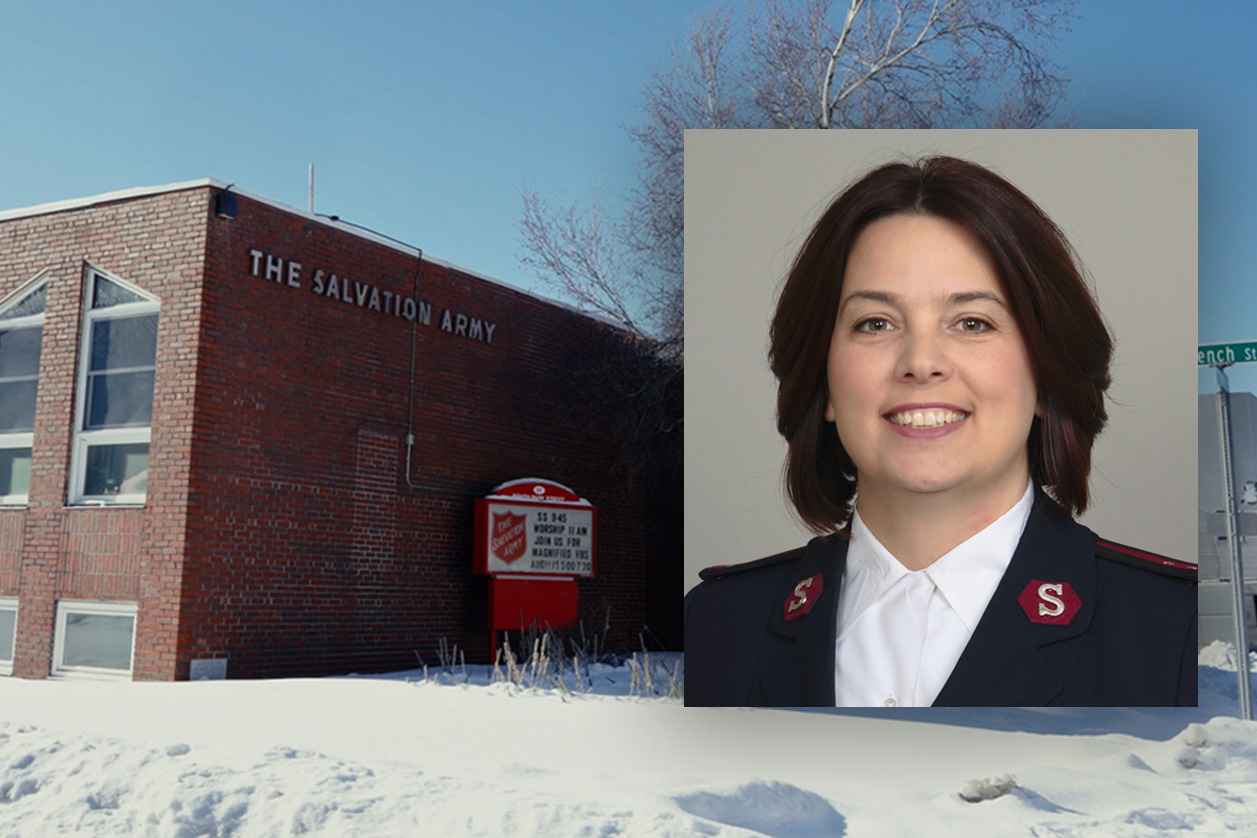
(Photos/Courtesy of Major Stephanie Thompson)
A Precious Life Saved in Bangor
by Robert Mitchell
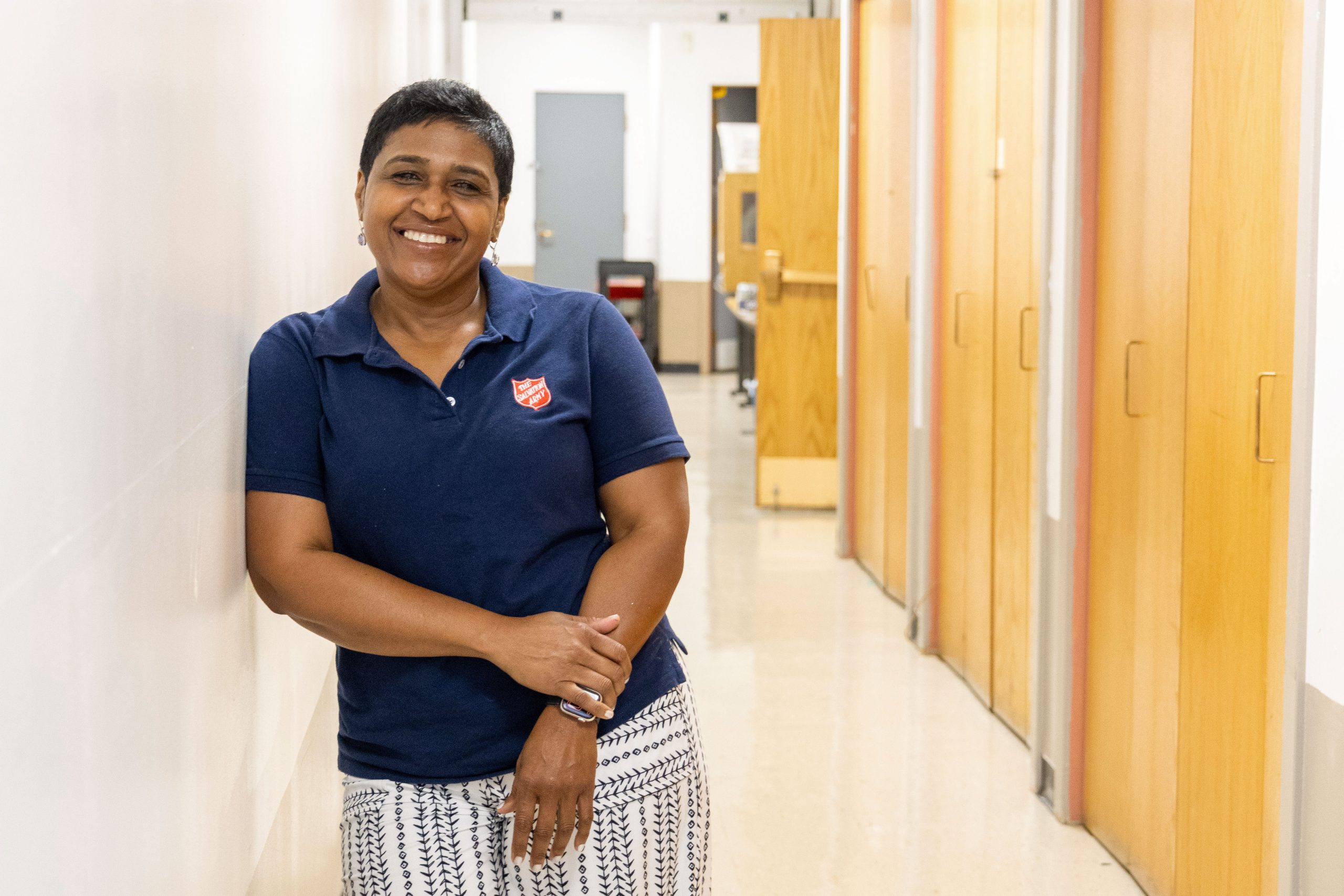
God often uses Salvation Army officers to help save souls, but Major Stephanie Thompson’s quick action recently saved the life of an unconscious woman who had overdosed at her corps.
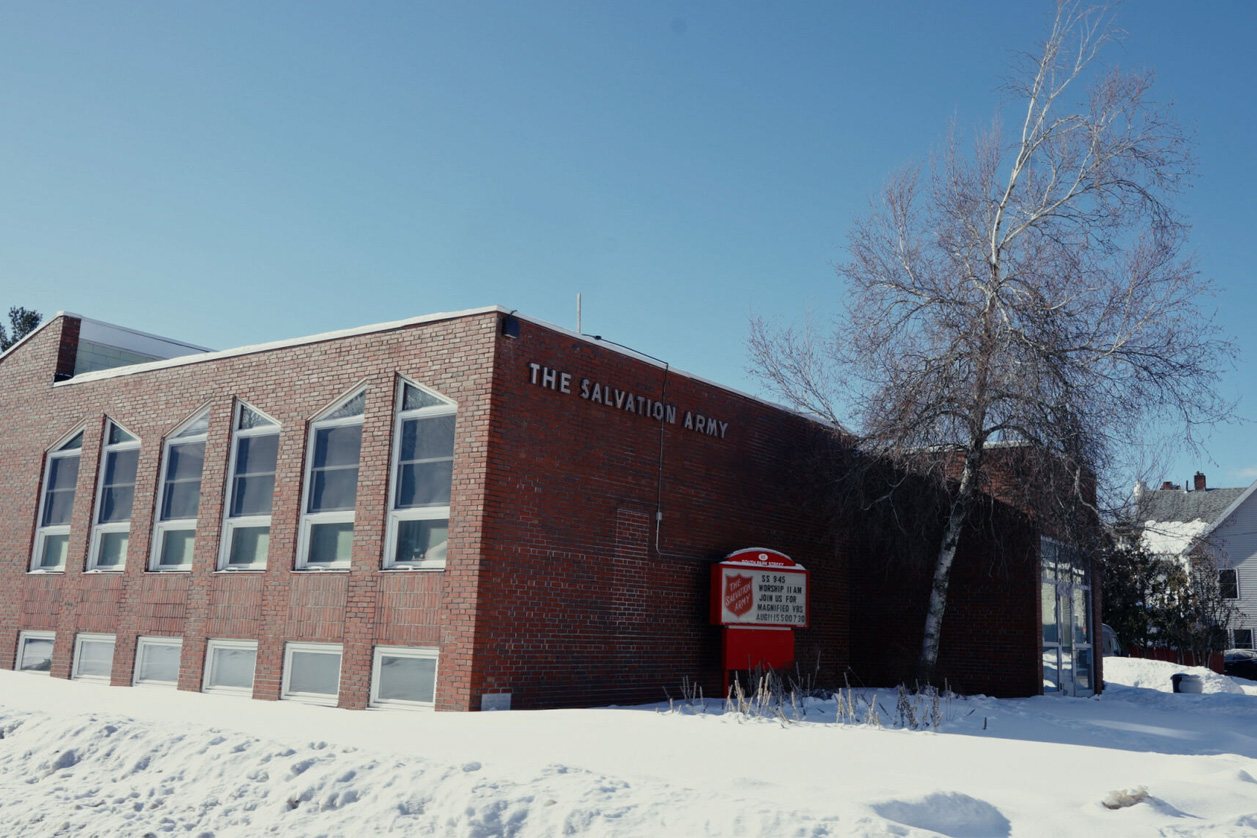
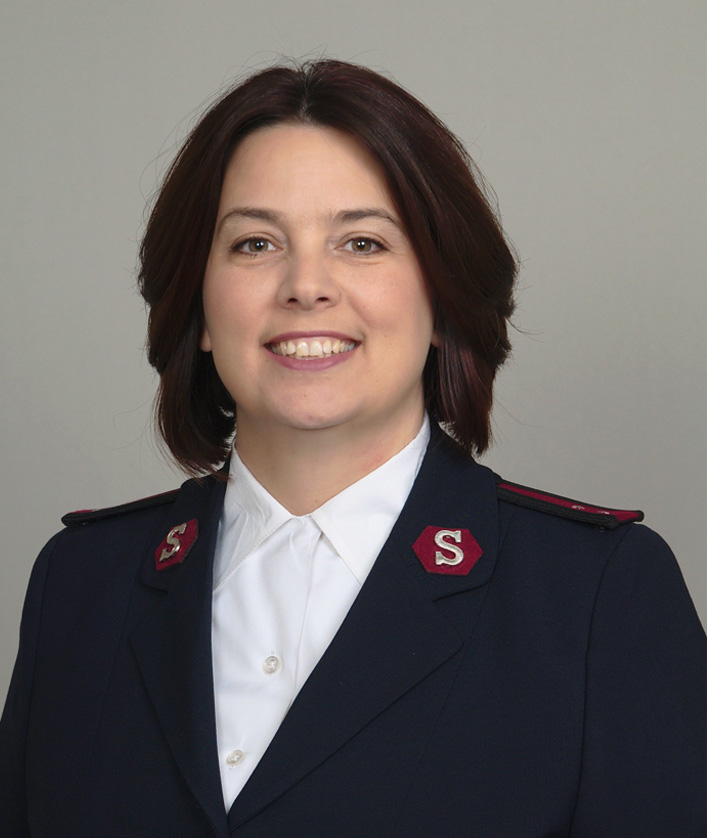 Major Stephanie had just pulled into the parking lot from an appointment the morning of February 4 when she noticed a group of people congregating around a shed behind the Bangor Citadel Corps in Maine. It’s a common gathering place for drug deals and people who are “shooting up.” Major Stephanie went to break up the crowd when she saw a woman hunched over and others yelling for her to wake up.
“I told them if they got out of the way, I could help her. She was nonresponsive and wasn’t waking up,” Major Stephanie recalled.
The woman was wedged between a fence and the shed, and getting her flat proved difficult. Major Stephanie quickly noticed the woman’s gray complexion, a sign she lacked oxygen. Her lips were blue and she displayed no pulse.
While people ran out from the soup kitchen to see what was happening, Major Stephanie started CPR as her husband, Major William Thompson, called 911. One of those on the scene was Kristie Clark, the corps social worker, who has seen similar overdose episodes when people turn gray with blue lips.
“When I came outside, I thought I was looking at a dead woman,” said Clark, who believes the woman overdosed on fentanyl. “Without Major Stephanie, she wouldn’t be here. Everyone in town knows it.”
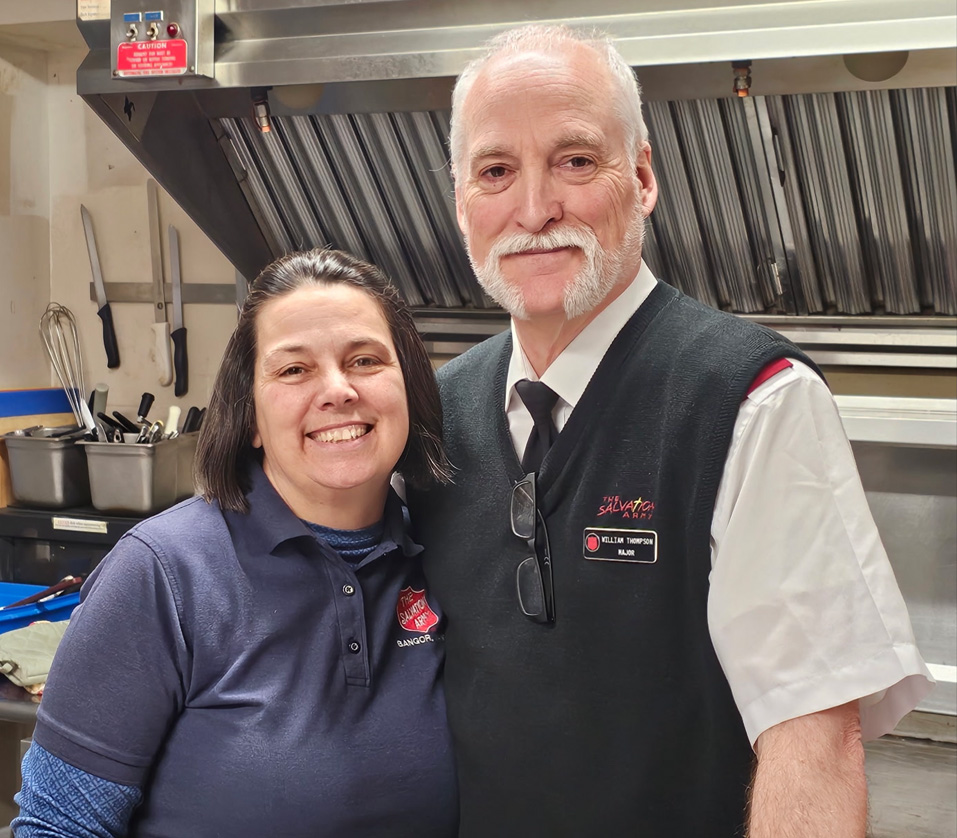
Majors Stephanie and William Thompson are pastors of The Salvation Army in Bangor, Maine.
A miracle occurs
Major Stephanie does not carry Narcan, but someone in the crowd gave her the nasal-spray unit that can quickly reverse overdoses, and she administered it to the woman. Local police and EMTs soon showed up and were able to find a pulse, and the woman survived.
After Major Stephanie helped police complete their reports, she went back to work at the corps. About 30 minutes later, she got an urgent page to go to the soup kitchen. The woman had miraculously returned.
“She said, ‘Are you the one who just saved my life?’ I said, ‘I guess so. Yeah.’ She gave me a hug and thanked me,” Major Stephanie said. “It was surreal because I had just seen her get wheeled away. I honestly did not think she was going to make it.”
The woman had declined to go to the hospital and was released. She came into the building for food, and Major Stephanie gave her a tour, explained the mission of The Salvation Army, and invited her to church.
“I told her God loved her and has a purpose for her life,” Major Stephanie said. “I prayed a covering of protection, and I told her multiple times, ‘If you ever feel like you don’t want to go on another minute, if you’re really lonely or need someone to talk to, come here. Please come here before you take any more drugs. We’re here for you.’ She was very thankful and appreciative.”
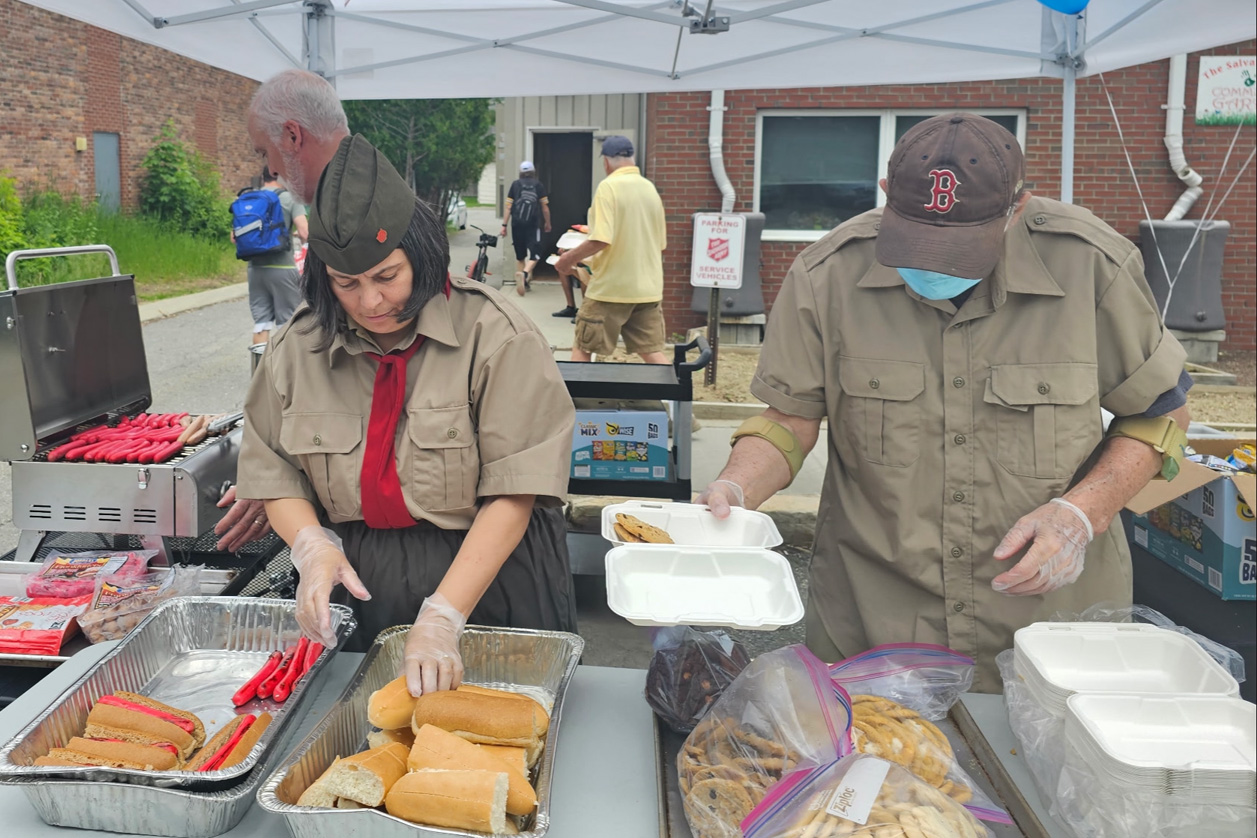
Quick on her feet
The woman told Major Stephanie she might come to church some Sunday but so far has not returned. She recently moved to another city in Maine.
“I’m hoping that she’ll pop back in here now that the weather’s changing,” Major Stephanie said.
While she was shaking and nervous during the ordeal, Major Stephanie believes she was simply in the right place at the right time, and the muscle memory of her Salvation Army–sponsored CPR training took over when it mattered most.
“My emotions were all over the place. When you’re in the moment, it’s all about training,” she said. “I’m thankful and appreciative that I could have the training and be there to do that.”
Bangor is home to nearly 20% of all fatal drug overdoses in Maine. That number jumped from 64 in 2024 to 67 in 2025 despite a drop in Maine’s overall fatal overdoses.
Clark, who knows most people in the community because of her job, said the city sees roughly two to four overdoses a week from meth, fentanyl, and other drugs — though not all are fatal. The situation is so bad she won’t let her young niece play in local parks because of the prevalence of used needles on the ground.
“It’s a very serious issue in Bangor,” Clark said. “Overdoses happen often. It’s everywhere. The Bangor we once knew is no longer. There are drugs on every corner. Every day we’re dealing with people coming in high or people who are trying to eat and they’re nodding off into their meals.”
Where to find help
The Bangor Citadel Corps is known as an oasis in the chaos, and Clark said the woman was blessed to have overdosed there and not somewhere else.
“Our majors have made us a safe place to go when you’re in recovery and trying to break that cycle. It’s a safe place to go when you need that support,” she said.
Major Stephanie said if a person is coherent and able to converse, she asks if they want help getting off the street and away from drugs.
“We try to get to know them so we can find a point of entry if they want to get off drugs,” she said. “We try to get them help with various agencies.”
Once someone is sober, The Salvation Army also helps people with housing and navigating the social services system. However, the people must do a lot of the work themselves by obtaining a job and attending recovery meetings.
“We have a good network in Bangor,” Major Stephanie said. “We try to help them get to the next step. What is the next step in their recovery and their journey? Because we’re in touch with them along the way, we’re always inviting them to come to worship and programs, where we can offer pastoral counseling when they’re here in the building. We also pray with them. We’re there. It’s relational. It’s a relationship kind of thing.”
Major Stephanie keeps an eye out for the woman she saved and considers it an honor to minister to the troubled and broken lives of those caught up in Bangor’s drug culture.
“We get the chance to go full circle and minister to them,” she said. “If she comes to church, that would be wonderful. I know that she’s heard the Word. We’ve ministered to her and told her the gospel message and that’s what I can do. The rest is up to God.”
Visit the website for the Bangor Citadel Corps in Maine.