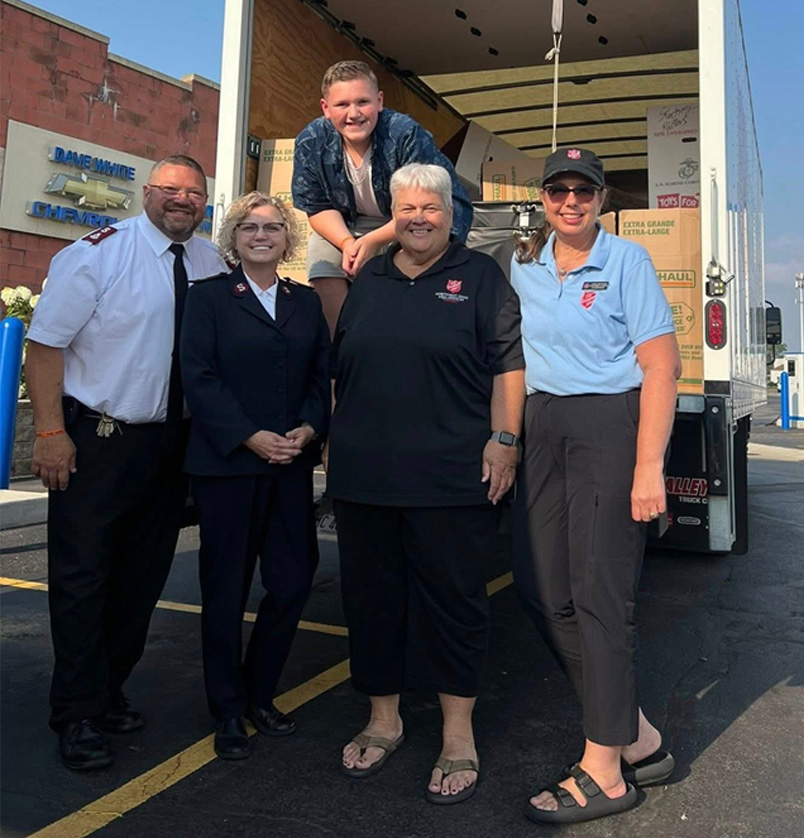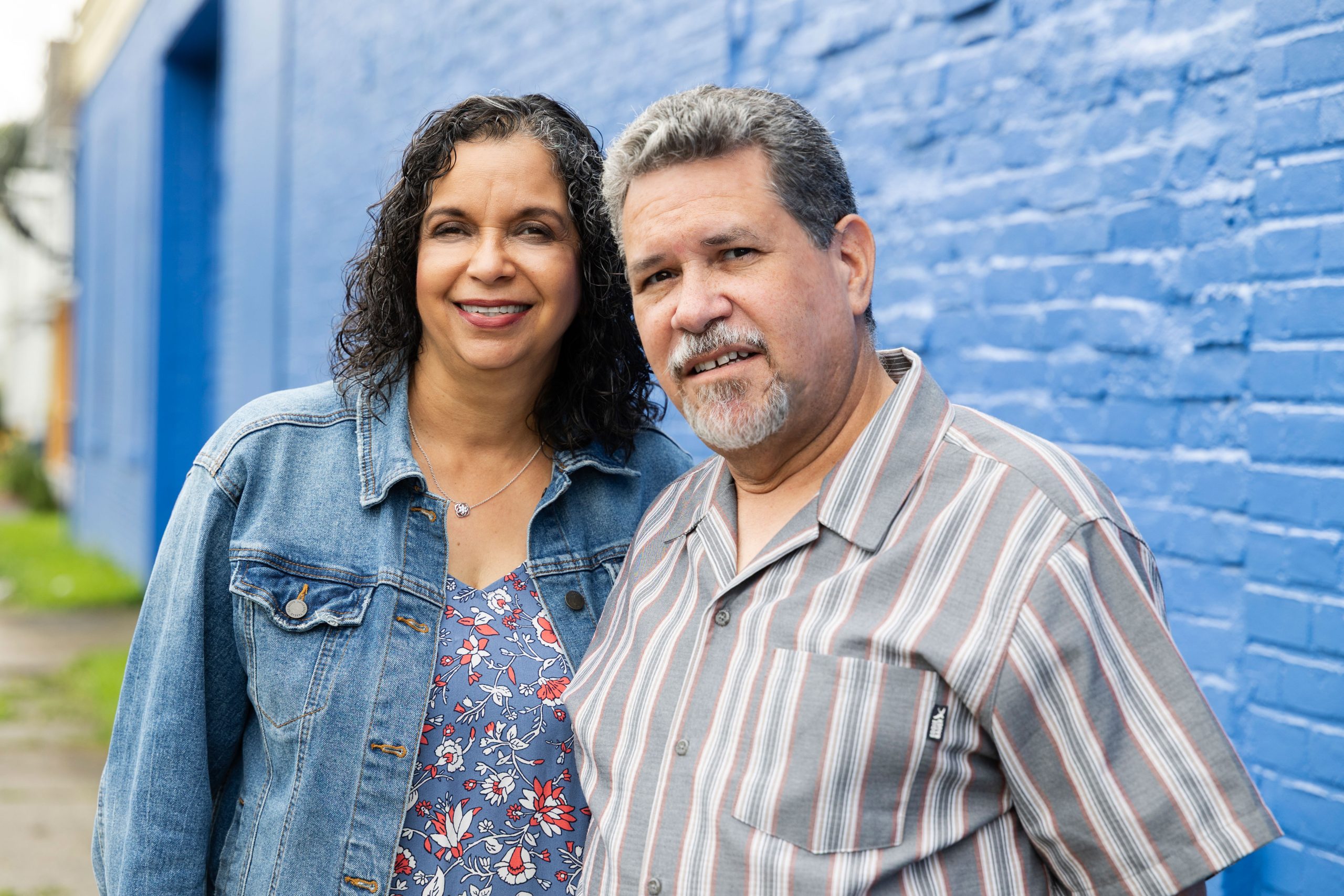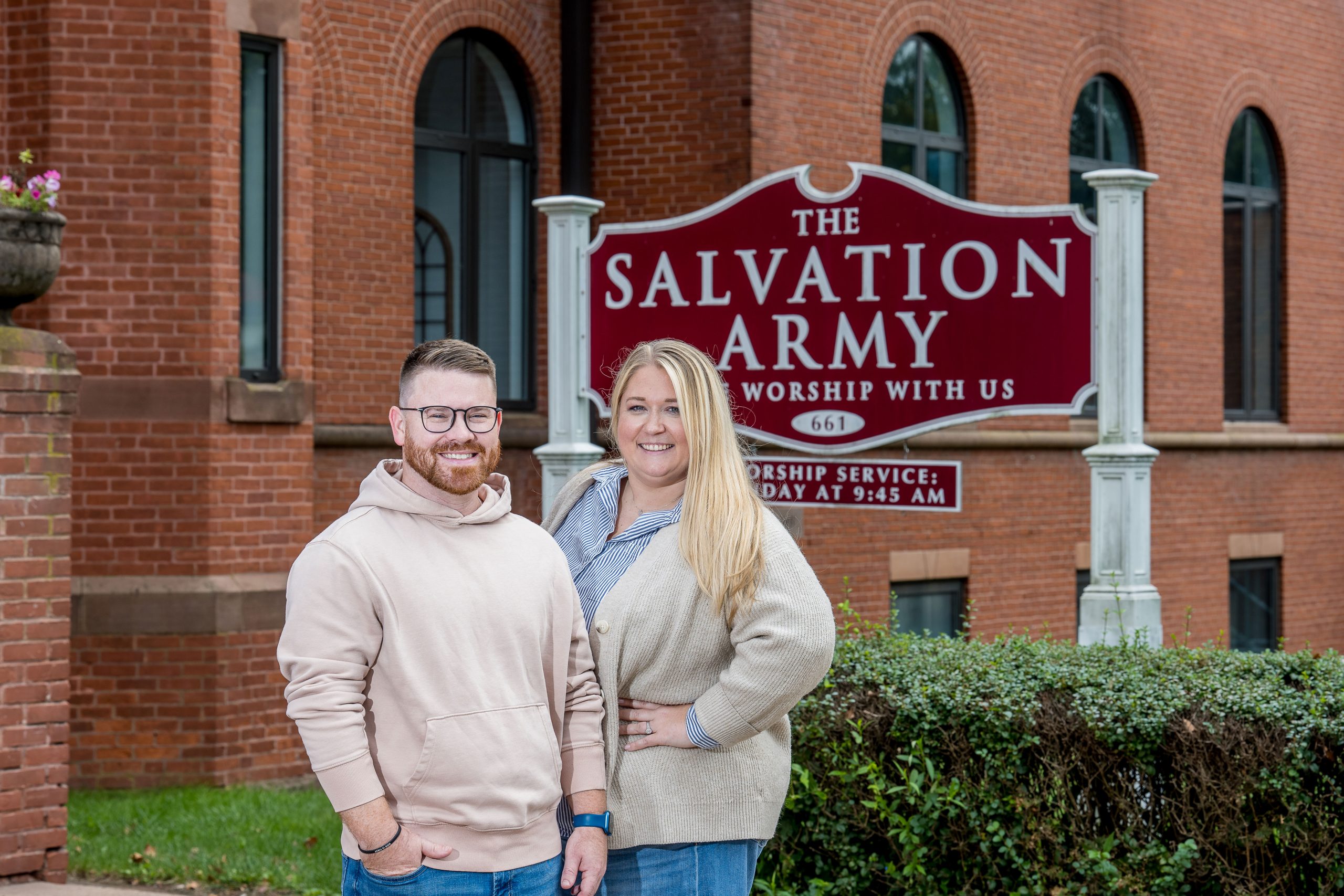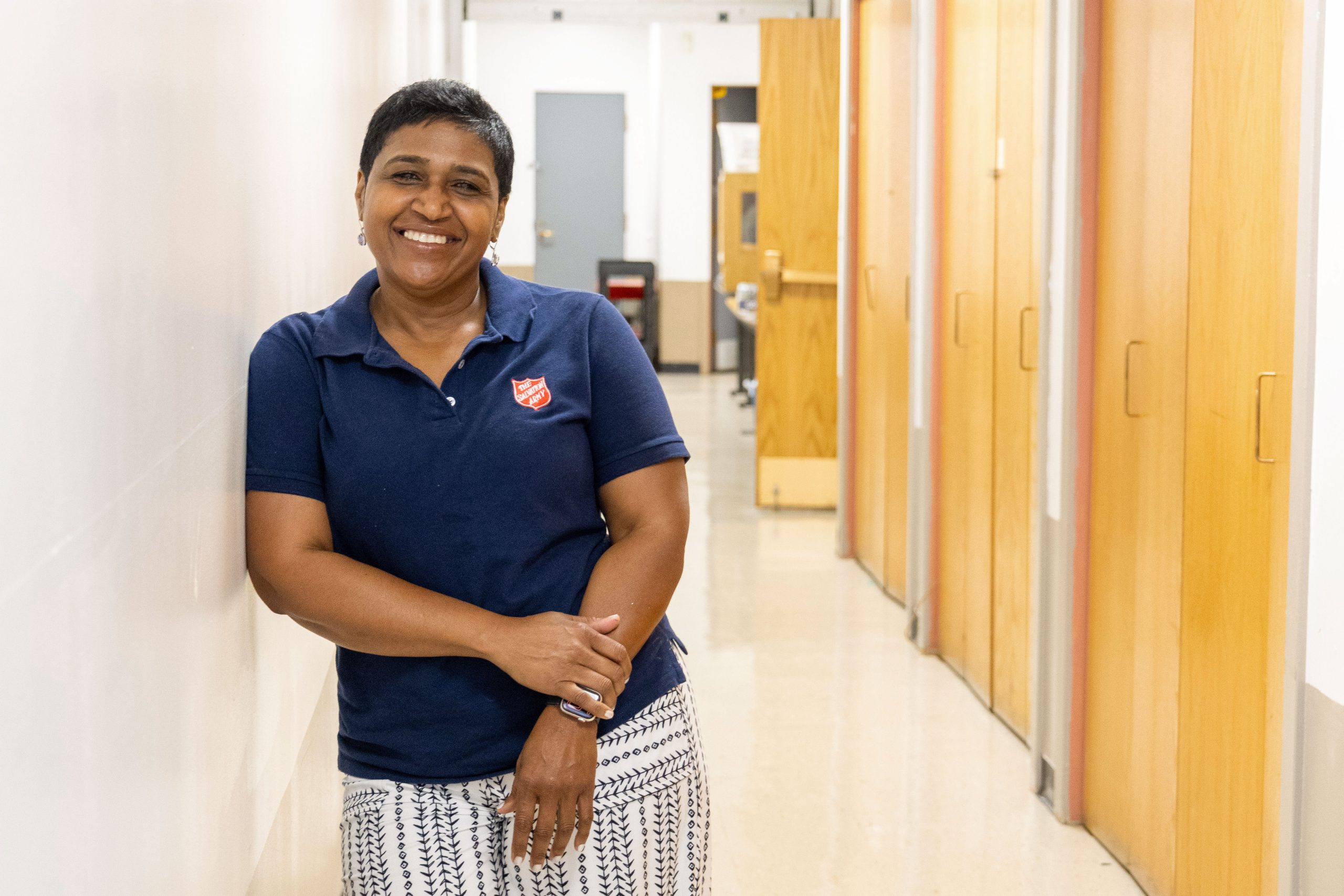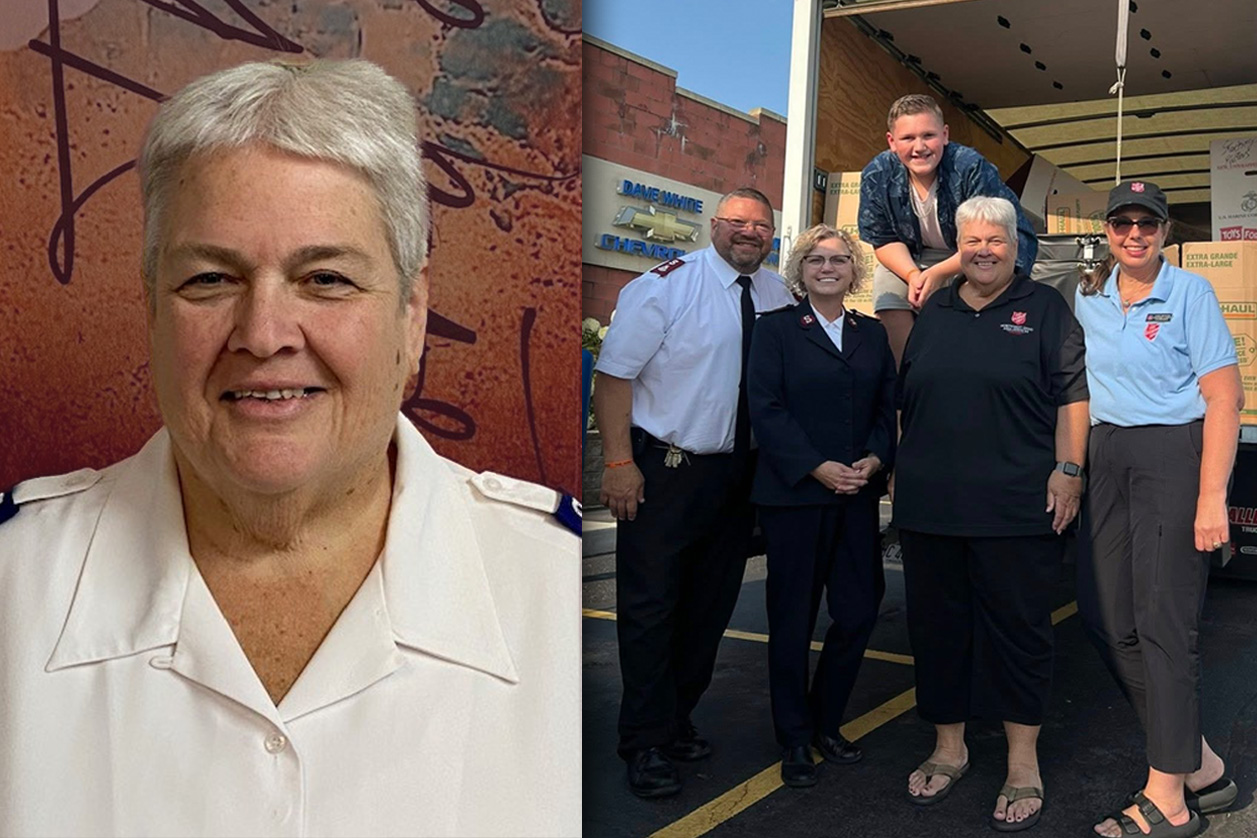
Corps Sergeant Major Beth Schwandt of the Toledo Citadel Corps, Ohio. (Photos/Courtesy of The Salvation Army Toledo, Ohio)
The Leaders Who Never Leave
by Robert Mitchell
Beth Schwandt was literally born into The Salvation Army in Toledo, Ohio, and remembers thinking at a young age, “I’m not gonna wear one of those uniforms for the rest of my life.”
God clearly had other plans.
“I started coming to The Salvation Army as a baby,” Beth says. “I’ve been coming for 65 years.”
She became a junior soldier at age 6 and a senior soldier at 14, and the Salvation Army uniform she once dismissed has been her constant companion through a long career of selfless ministry.
Beth put her faith in Christ a year before becoming a junior soldier, and her parents taught her to serve others. The corps became her foundation. She never missed an event and went to camp every summer.
She remembers learning an important lesson before she became a senior soldier from then-Major Hubert Knickerbocker. He told her that children often become junior soldiers because their parents told them to, but becoming a senior soldier was something you do for yourself. She reviewed the words of the Soldier’s Covenant very carefully before signing.
“When I read those words, I had to think about whether I wanted to do that for the rest of my life,” Beth says. “I feel that was my real commitment to the Lord. I wanted a real relationship with the Lord that wasn’t because someone told me I needed to do it, but because I wanted to walk closer to Him. Ever since then, I’ve just grown closer and closer to Him. I feel like I learn something new every day.”
A pillar of the church
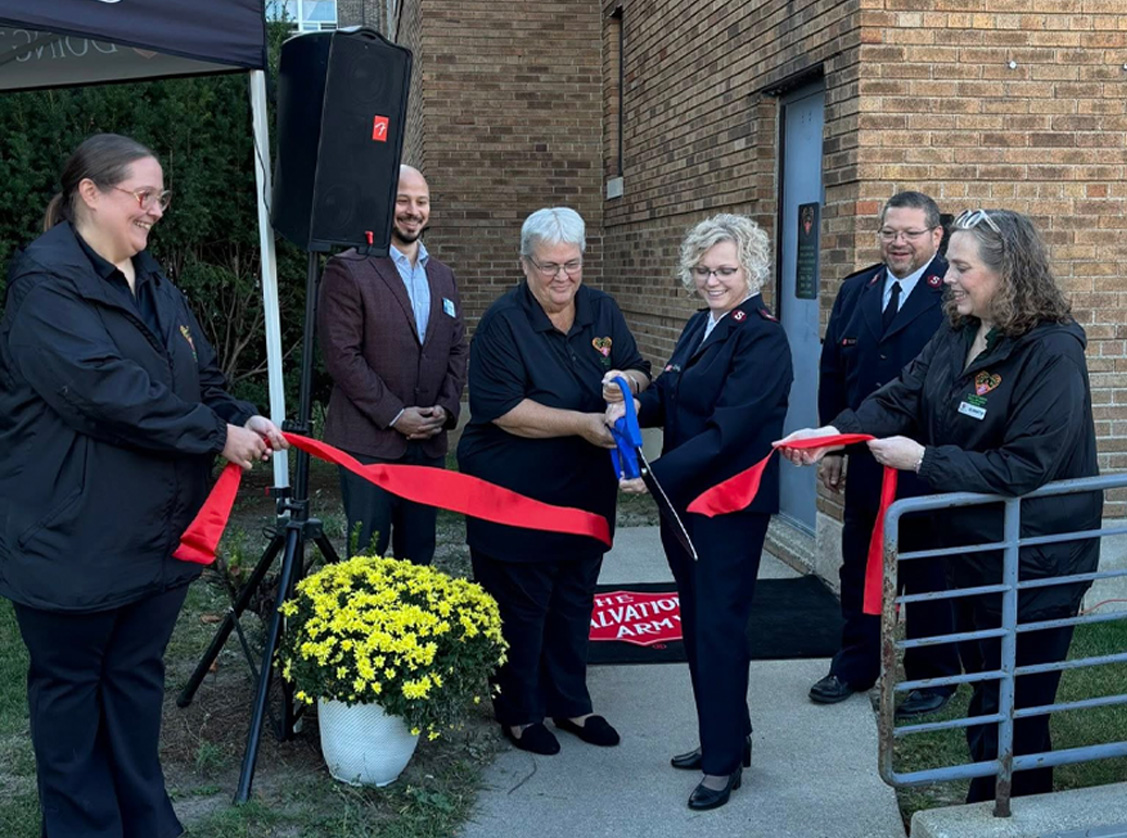
Through the years, Beth has been involved in nearly every aspect of ministry at the Toledo Citadel, where she has been the corps sergeant major (CSM) for the last three years. That doesn’t even begin to describe her involvement, which includes Bible studies, Sunday school, worship, women’s ministry, Community Care Ministries, Corps Council, and all youth programming. She was the young people’s sergeant major (YPSM) for 20 years.
You can often find her these days preaching and leading adult Bible study, Sunday school, youth group, and Corps Cadets, says Lieutenant Christian Blaire, the current corps officer in Toledo.
“In short, she serves in any capacity needed, and if there are any corps programs or events, she wants to be present,” Blaire says. “In her words, ‘If the corps is doing something, I need to be present.’ Not because she just wants to be there, but because she knows there are opportunities for people to meet Christ, and she does not want to miss out on the chance to be there for those in need.”
Beth says her motivation is simple: She believes in the mission of The Salvation Army to preach the gospel of Jesus Christ and meet human needs without discrimination.
“I believe in the idea that everyone matters,” she says. “There’s not a single person who walks through our front door that isn’t a person loved by Jesus, and because Jesus loves them, we’re called to love them as well.
“It doesn’t matter what their circumstances are or why they walked through the door, we’re called to love them. If we’re not willing to do that, we shouldn’t be inside these doors.”
A different calling
Several officers who have come through Toledo have urged Beth to consider becoming a Salvation Army officer, but she has rebuffed the idea. While officers are frequently reassigned, local lay leaders like the CSM live in the community and remain there.
“God calls people to training and I truly believe that,” she says, “but He also calls people to stay in the corps. Because if we don’t have people who are willing to do leadership in the corps, how is the corps going to survive? The officers leave. You need steady leadership in the corps. I always felt that’s what God called me to do.”
When congregants face life challenges like a death in the family, marital discord, drugs and alcohol, and mental health struggles, they need mentors, Beth says. They need a spiritual leader in the corps to rely on, grow a relationship with, and trust. She wants to be that person. And she believes lay leaders need to stand up and help make disciples, as Jesus commanded in Matthew 28.
“How can we go throughout the world and do that if we’re not doing it in our own chapel on Sunday morning? We need to make disciples. That’s what Jesus called us to do,” she says.
Beth faced a life-changing moment three years ago. She had been the YPSM for 20 years when she was asked to become the CSM, a role that would require her to minister more to adults. It was a hard decision that required much prayer before she finally agreed.
“God just really spoke to me and said, ‘You’ve done this for all these years with children, but what about the adults? You have a gift for that as well,’” Beth says. The adults needed mentors to come alongside them and guide them too, and God was calling her to fill that role.
Never stop serving
Beth’s parents both worked for The Salvation Army, and, like her vow not to wear the Salvation Army uniform her entire life, she once swore she would never work for the organization. God, again, had other plans. Beth recently completed 25 years as a Salvation Army employee, the last 18 as operations manager for Northwest Ohio Area Services in Toledo.
While she has spent most of her life in Toledo, Beth briefly moved to Connecticut to work with people with developmental disabilities. She also helped The Salvation Army plant the New Life Center in East Hartford, Connecticut, and worked at the Southern New England Division’s headquarters for seven years.
Beth sees her entire Salvation Army experience, especially her roles as YPSM and CSM, as a privilege that she doesn’t take for granted.
“It’s not something I see as a job because I get the opportunity to see people grow in the Lord,” she says. “That is an honor.”
Beth has no plans to stop serving as the CSM anytime soon, but even if she’s not in that role, she wants to be involved somehow like she has been for the past six decades.
“I don’t think I’ll ever quit having some sort of role in leadership in the corps because I don’t think we ever stop leading people and mentoring people,” she says. “God has a calling on our lives — and even if that call is to stand at the back door and greet the person with a welcoming face as they walk in, maybe that’s the last thing I’ll be doing. Who knows what God will be calling me to next?”