Salvationists in Scripture
by Colonel Richard Munn
Introduction
You and I are part of a distinct denomination within the global Church of Jesus Christ. We have a shared mission, worldview, and core beliefs that bind us together as a movement. A mysterious and nebulous term often applied here is “Salvationism.” We know it when we see it, but we often find it hard to neatly describe.
Here’s where the Scriptures can help. Within the pages of the greatest story ever told, from the Garden of Eden to the New Jerusalem, we find a cast of larger-than-life characters from diverse regions, different centuries, with personalities that captivate our attention. Frederick Buechner lovingly describes them as “Peculiar Treasures.”
Within this cast, which the most fertile minds in Hollywood surely could not generate, are some who embody “Salvationism.” That is to say, the story of their lives and the values they espouse represent the essence of Salvation Army word and deed.
We might playfully say that they are “Salvationists in Scripture.” Over the course of 2026, we’ll look at 10 people in the Bible who exude Salvationist attributes, from Amos to Andrew, Luke to Lydia, and Micah to Mary.
Be sure to come back each month as we build our Salvation Army Scripture Hall of Fame.
Let’s start with that military leader, General Joshua.
Salvationists in Scripture
1. Joshua: Commander
Joshua, God’s chosen successor to mighty Moses, is the consummate military man, courageous, visionary, and decisive. Herbert Lockyer calls him “the first soldier consecrated by sacred history.” As such, it’s easy to see him as the archetypal Salvationist in Scripture.
Born a slave in Egypt, he becomes commander-in-chief. Gallant Joshua is one of the few characters populating the pages of the Old Testament of whom nothing ill is spoken. In stark contrast to many later kings, his epitaph reads simply, “Israel served the Lord throughout the lifetime of Joshua” (Joshua 24:31).
Mission accomplished.
Maybe no better indicator of his military precision and decisiveness comes near the end of Joshua’s life, when he poses a simple, binary challenge to the beleaguered and bedraggled people of Israel: “Choose for yourselves this day whom you will serve. … But as for me and my household, we will serve the Lord” (Joshua 24:15).
A leader to the end.
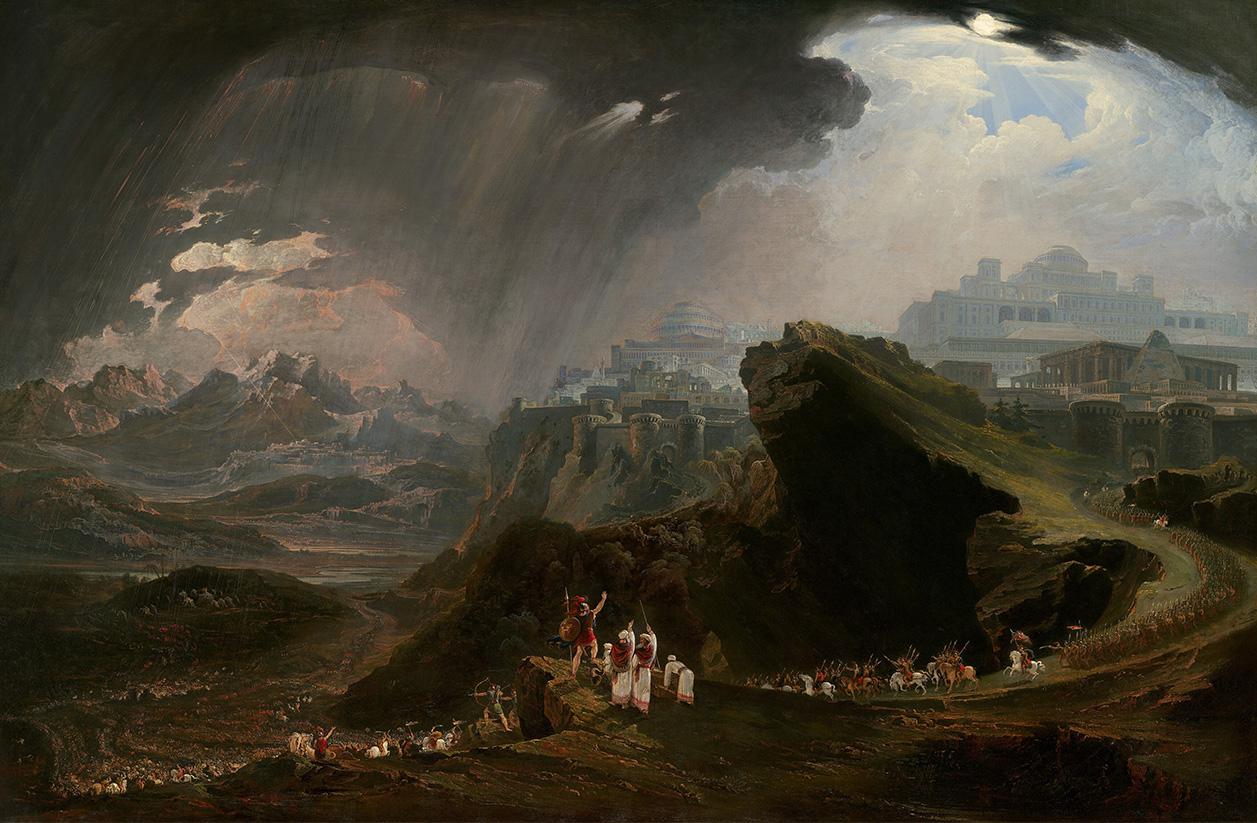
Joshua Commanding the Sun to Stand Still Upon Gibeon, by John Martin, 1816. (Courtesy of National Gallery of Art, Washington)
In The Salvation Army, we look to our senior leaders for inspiration and direction. Often, theirs is an unenviable task. At the end of the day, Joshua-like integrity more than compensates for their human vulnerabilities and idiosyncrasies.
So, what can we fellow Salvationists learn from the life of Joshua?
In the face of overwhelming obstacles, young Joshua says, “The Lord is with us. Do not be afraid” (Numbers 14:9).
Part of our theological heritage includes “Wesleyan optimism.” Even in dire circumstances around the world, puckish Salvationists often say, “C’mon colleagues, we can do it.”
The drive behind elder Joshua’s Yes/No referendum to follow the God of Israel is his ruthless opposition to any hint of commingling competing lesser deities with the grand purposes of God. He will have none of it. We do well in our day to heed his example.
Joshua is the poster child for “Man with a Mission.” Centuries later, Paul writes, “No one serving as a soldier gets entangled in civilian affairs” (2 Timothy 2:4). Joshua embodies this. Today we might pray, “Lord, lead us not into entanglement.”
Thank you, General Joshua. Our households will serve the Lord.